


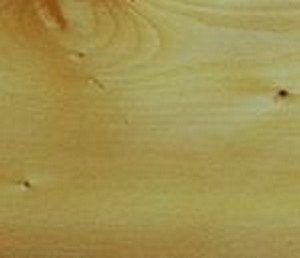
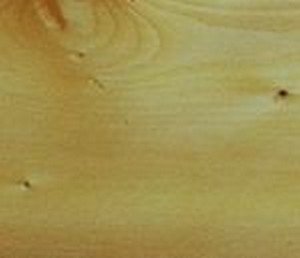

Huon pine (Lagarostrobos franklinii )
It is a slow growing, but long-lived tree; some living specimens of this tree are in excess of 2000 years in age. It grows to 10-20 m tall, exceptionally reaching 30 m, with arching branches and pendulous branchlets
- Shipping info
We deliver worldwide By Australia Post
- Payment methods
X-Payments ( Credit Card ) PayPal ( accepts credit card ) Square ( Credit card ) Bank Transfer
- Return Policy
Custom engraved products are made on your approval of proof emailed to you. at receipt of order
These cannot be returned
Huon pine
( Lagarostrobos franklinii )
It is a slow growing, but long-lived tree; some living specimens of this tree are in excess of 2000 years in age. It grows to 10-20 m tall, exceptionally reaching 30 m, with arching branches and pendulous branchlets. The leaves are spirally arranged, very small and scale-like, 1-3 mm long, covering the shoots completely. It is dioecious, with male (pollen) and female (seed) cones on separate plants. The male cones are yellow, 5-8 mm long and 1-2 mm broad. The mature seed cones are highly modified, berry-like, with 5-10 lax, open scales which mature in 6-8 months, with one seed 2-2.5 mm long on each scale. Unlike the closely related New Zealand genus Manoao, the scales do not become fleshy and are water-dispersed, not bird-dispersed (Molloy 1995).
A stand of trees reputed to be in excess of 10,500 years in age was recently found in North Western Tasmania on Mount Read. Each of the trees in this stand is a genetically identical male that has reproduced vegetatively. Although no single tree in this stand is of that age, the stand itself as a single organism has existed that long.
The wood was highly prized for its golden yellow colour, fine grain and natural oils that resisted rotting. The chemical that gives the timber its unique smell and preservative qualities is methyl eugenol. Heavy logging of the trees for its fine timber coupled with the trees' slow growth has led to remaining stands being less than 10,500 hectares (26,000 acres). The remaining stands of this species of tree now has protected status within the Tasmanian Wilderness World Heritage Area.
MyChoice Engraved products see selections:-
We ship using Australia Post parcels
Regular and Express options are available for National delivery
and to your own Country
We accept the following payment methods:
PayPal ( accepts credit card ) Square ( Credit card ) Bank Transfer
Products are made to order
On placement of order confirmation is emailed to you
If you have any image to be used on product
Return email with image/s attached.
A layout proof is prepared and emailed to you as pdf file.
Once final layout is approved, then this is what is made.
Product received in good condition as per proof is NOT returnable
If you do have issue with quality of your receipt, then send photo and reasons
In approved cases a replacement product will be made